We all work. Every single day. But somewhere along the way, work starts feeling heavy — not because of the effort, but because of what we tie to it. Praise, results, validation, outcomes.
The day it doesn't come, something inside us breaks a little.
Thousands of years ago, on the battlefield of Kurukshetra, Krishna said something to Arjun that answers this exactly.
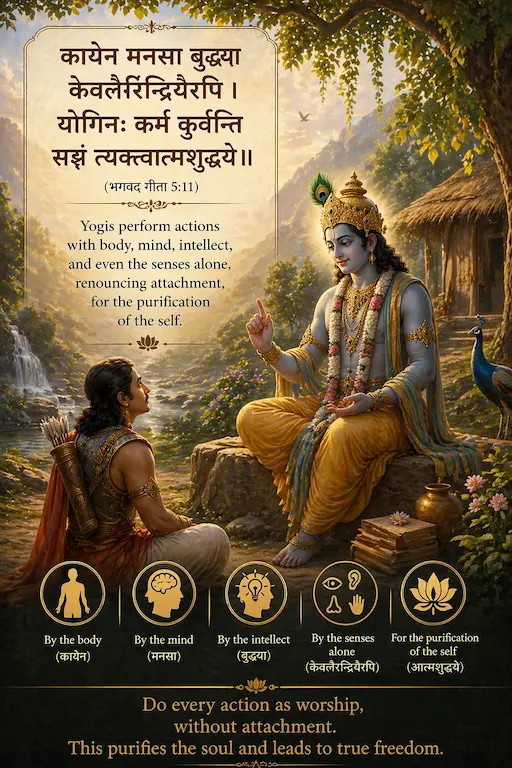
📖 The Verse — Gita 5:11
कायेन मनसा बुद्ध्या केवलैरिन्द्रियैरपि।
योगिनः कर्म कुर्वन्ति सङ्गं त्यक्त्वाऽत्मशुद्धये॥
"The yogis, giving up attachment, perform actions with their body, senses, mind and intellect — only for the purpose of self-purification."
— Bhagavad Gita 5:11
━━━━━━━━━━━━━━━━━━━━
Three great teachers. One verse. What did they see?
━━━━━━━━━━━━━━━━━━━━
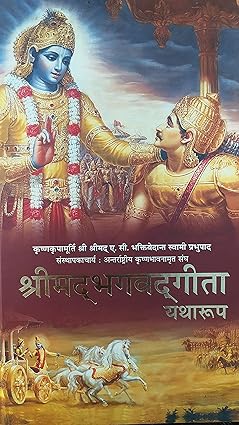
📗 Prabhupada — Bhagavad Gita As It Is
Prabhupada says the true yogi does every action for God's pleasure. And here's his beautiful insight: God needs nothing from us — everything we have is already His. But there's one thing only we can offer — the purity of our own heart. That is the greatest offering.
📘 Swami Mukundananda
He explains that wise yogis realize chasing happiness in material things is like chasing a mirage. So they stop running. They still work — fully, completely — but they work for inner purification, not outer applause.
📙 Gita Press, Gorakhpur
The traditional commentary highlights the word "kevalaiḥ" — meaning "only" or "mere." The body, mind, senses — they are just instruments. A yogi uses them. He is not used by them.
━━━━━━━━━━━━━━━━━━━━
"Giving up attachment" — does that mean working carelessly?
━━━━━━━━━━━━━━━━━━━━
No. Not at all.
It means: work with full dedication, but don't make the result the source of your happiness.
"I'm working because I need praise" — that's attachment.
"I'm working because this is my duty" — that's Karmayog.
A surgeon operating at 2am — if he's thinking about his fee, his hands may tremble. But if he thinks "my job is to save this person" — those same hands become precise. That shift in intention is everything.
━━━━━━━━━━━━━━━━━━━━
Why this verse matters more than ever today
━━━━━━━━━━━━━━━━━━━━
LinkedIn impressions. Instagram likes. Constant validation-seeking. And when it doesn't come — burnout, anxiety, emptiness.
Psychologists call this "extrinsic motivation." Research consistently shows that people driven only by external rewards burn out faster.
The Gita called this thousands of years ago — "ātma-śhuddhaye" — work for self-purification. That's intrinsic motivation. It never runs dry.
A teacher who teaches to get praised will eventually feel empty. A teacher who teaches because watching a student understand something lights her up — she'll feel full after every class. That's Karmayog in real life.
━━━━━━━━━━━━━━━━━━━━
One small thing to try from today
━━━━━━━━━━━━━━━━━━━━
Before you start any task today, pause for one moment and ask yourself:
"Am I doing this for what people will think — or because it's the right thing to do?"
When that answer starts to shift — you've begun walking the path of Karmayog.
Same work. No burden.
— Next: Nishkama Karma and Modern Psychology — does science agree with Gita?
To read:
How to Stay Calm in Difficult Situations – What Bhagavad Gita Teaches